
Free browser tool
Hear and spell any name
Type a name, choose a voice, then hear it read naturally or spelled one letter at a time.
Name pronunciation and spelling
Hear your name. Spell it clearly.
Hear a name, spell it clearly, and learn the stories behind it.
-

Apostrophes, Hyphens and Spaces in Names: Store Them, Search Carefully
Keep the spelling a person gives you while supporting tolerant search. A practical checklist for forms, CRM imports and duplicate review.
-

Two Names Can Look Identical but Compare Differently: Unicode Normalization Explained
Learn why identical-looking names compare differently, how NFC normalization helps, and why a matching string does not identify a person.
-

Do Not Delete the Accents: How Diacritics Change Names in Databases and Search
Preserve names with diacritics while designing useful search keys, locale-aware comparisons and safer record matching.
-
IPA or Easy Respelling? Which Pronunciation Guide Should You Put Next to a Name?
IPA is precise for trained readers, while an audience-friendly respelling can be easier for announcers or coworkers who do not read phonetic notation.
-
When One Phonetic Hint Is Not Enough: Custom Pronunciation Lexicons for Names
Speech platforms can support pronunciation controls beyond inline hints; Microsoft Speech documents both SSML phonemes and custom lexicons.
-

How to Make Text-to-Speech Say a Name Correctly With IPA and SSML
SSML phoneme markup can supply a custom pronunciation using phonetic alphabets such as IPA or X-SAMPA on supported speech systems.
-

Why Sorting People by Last Name Is Harder Than It Looks
Person-name formatting and locale-sensitive collation are separate problems; display order should not automatically be reused as a universal sort key.
-
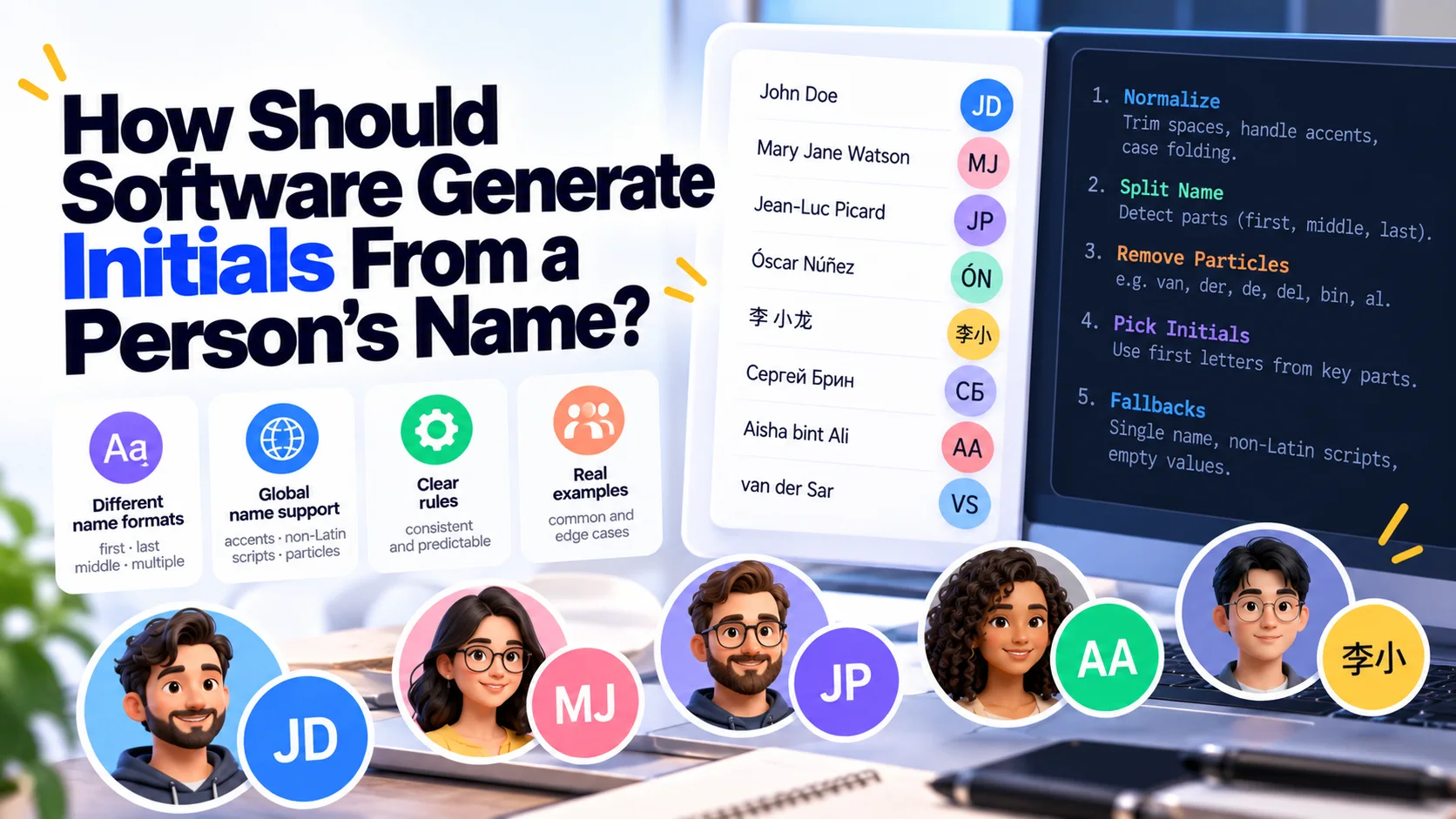
How Should Software Generate Initials From a Person's Name?
CLDR treats monograms as a distinct person-name formatting use case rather than assuming that taking the first character of two database fields is universally correct.